For objects and details
Resin and hardener can be cast or used as a coating to create decorative pieces, protect surfaces, or bond and repair suitable materials.
Custom epoxy production for the places we live, gather and welcome guests. From a hotel lobby to a family home, we shape floors, feature walls and resin pieces around your space and your brief.
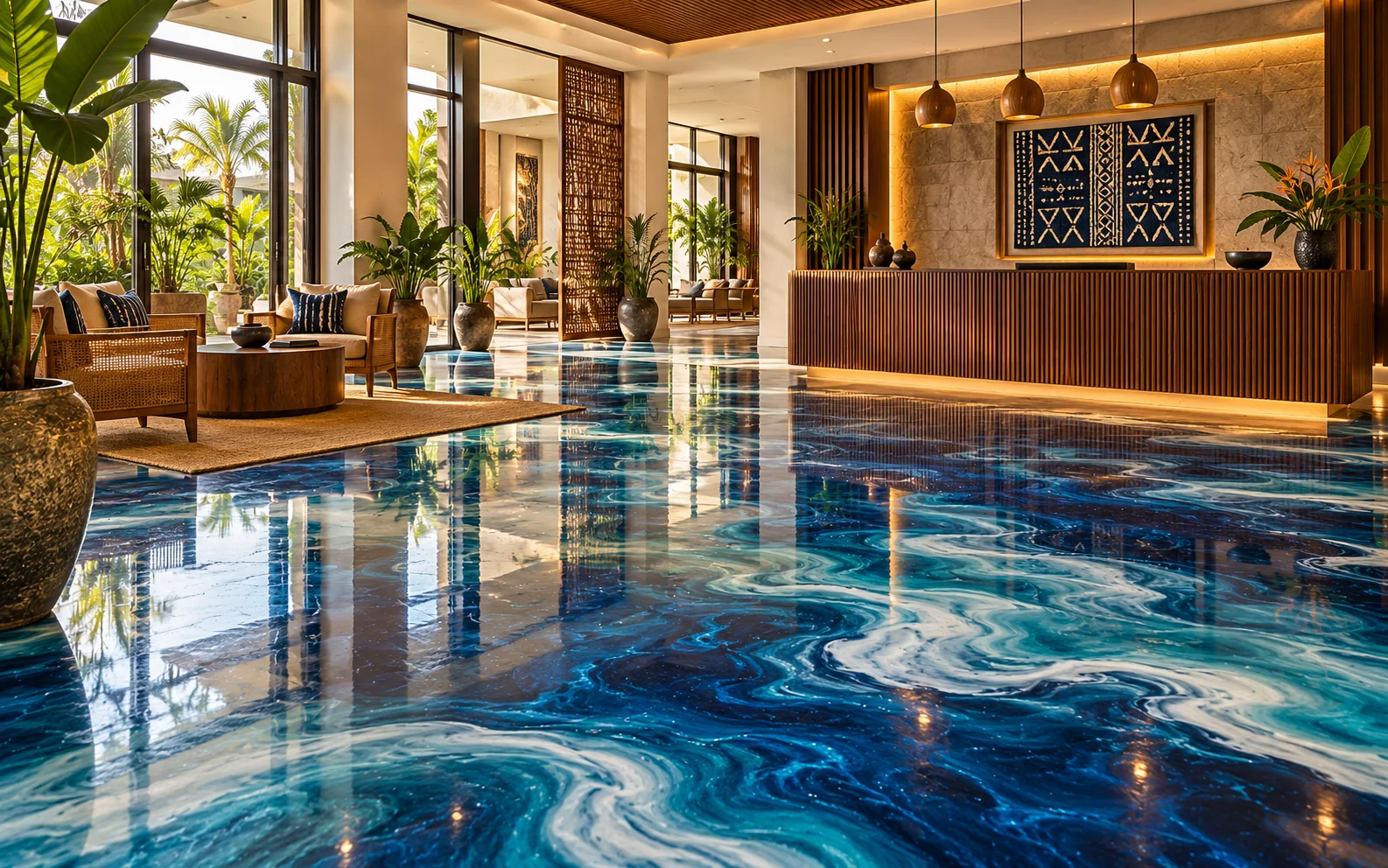
Inspired by the warmth of Nigerian hospitality, these concepts pair expressive surfaces with timber, woven texture and indigo accents. Each real commission starts with its setting, dimensions and intended use.
Epoxy has been used for many years. As more finished spaces are shared through media and word of mouth, more people are discovering what it can do. An epoxy system begins with a synthetic resin and a hardener. Mixed in the correct ratio, they react and cure from a liquid into a hard, durable material. The result can bring both character and lasting performance to a space.
Resin and hardener can be cast or used as a coating to create decorative pieces, protect surfaces, or bond and repair suitable materials.
Epoxy floor systems create a durable surface with finish and colour options chosen for the substrate, foot traffic and daily use.
Selected sand can be incorporated into an epoxy floor system to create a textured finish. The right system and level of slip resistance depend on the space.
Beyond floors, resin epoxy is commonly used for:
Have an idea for a custom piece? Tell us what you have in mind
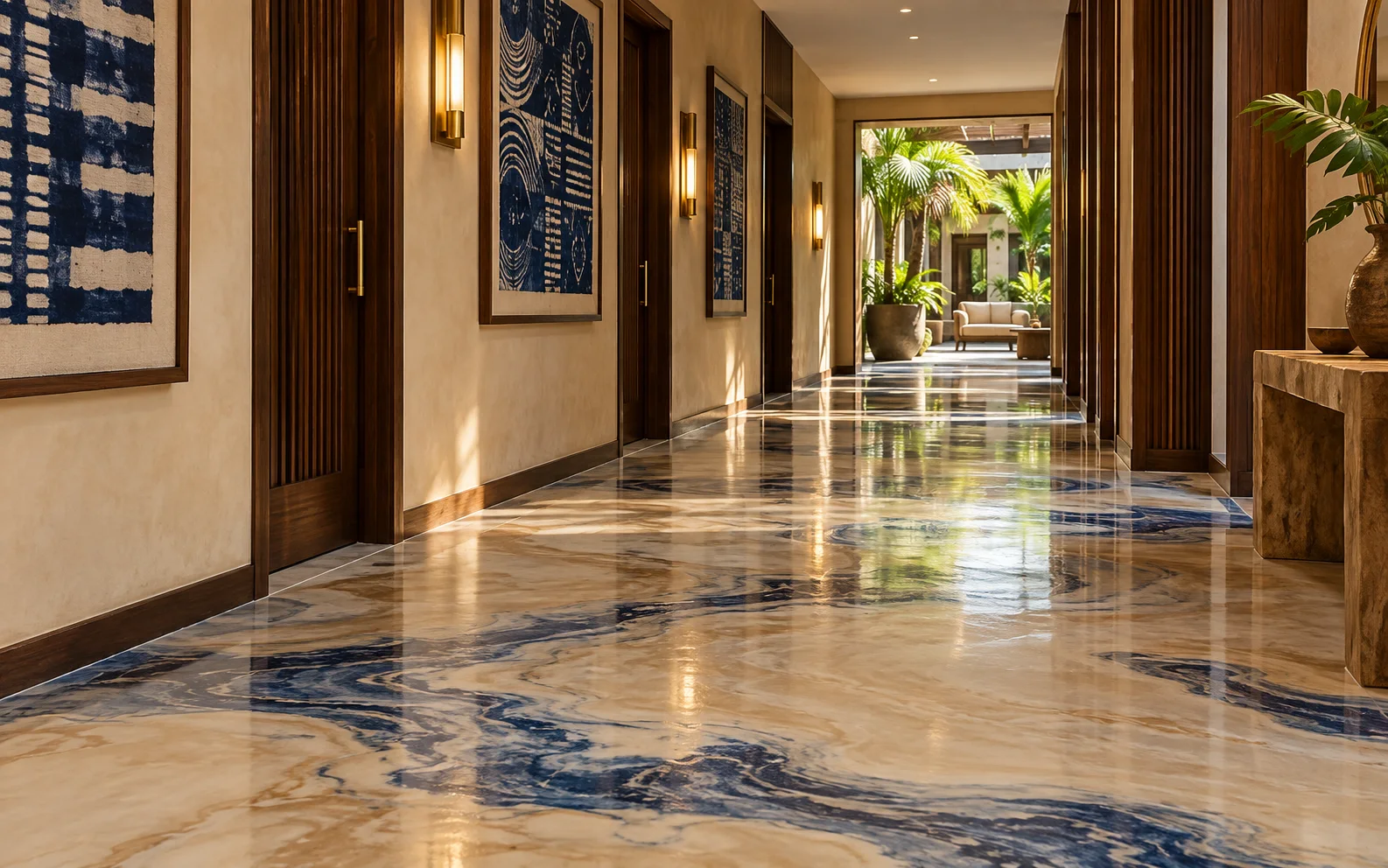 Illustrative finish concept
Imagine a hotel arrival, restaurant or home with colour and movement underfoot. We review the existing floor, foot traffic, slip resistance and maintenance needs before proposing a system and installation scope.
Floor epoxy is a resin-and-hardener system applied over a properly assessed and prepared base. As it cures, it forms a hard-wearing surface that can also carry colour, pattern or sheen. The system is chosen for the room and its daily use, not just for the image you like.
Homes and apartments, shops and offices, garages and workshops, warehouses, and suitable healthcare or service spaces.
A well-specified system can be durable, easier to clean than bare concrete, and available in many colours and finishes. Resistance to wear, stains and chemicals depends on the product and the conditions of use.
These supplied images show different looks, from quiet metallic movement to bold printed scenes. They are finish references; suitability, sheen, slip resistance and maintenance are confirmed for the actual space.
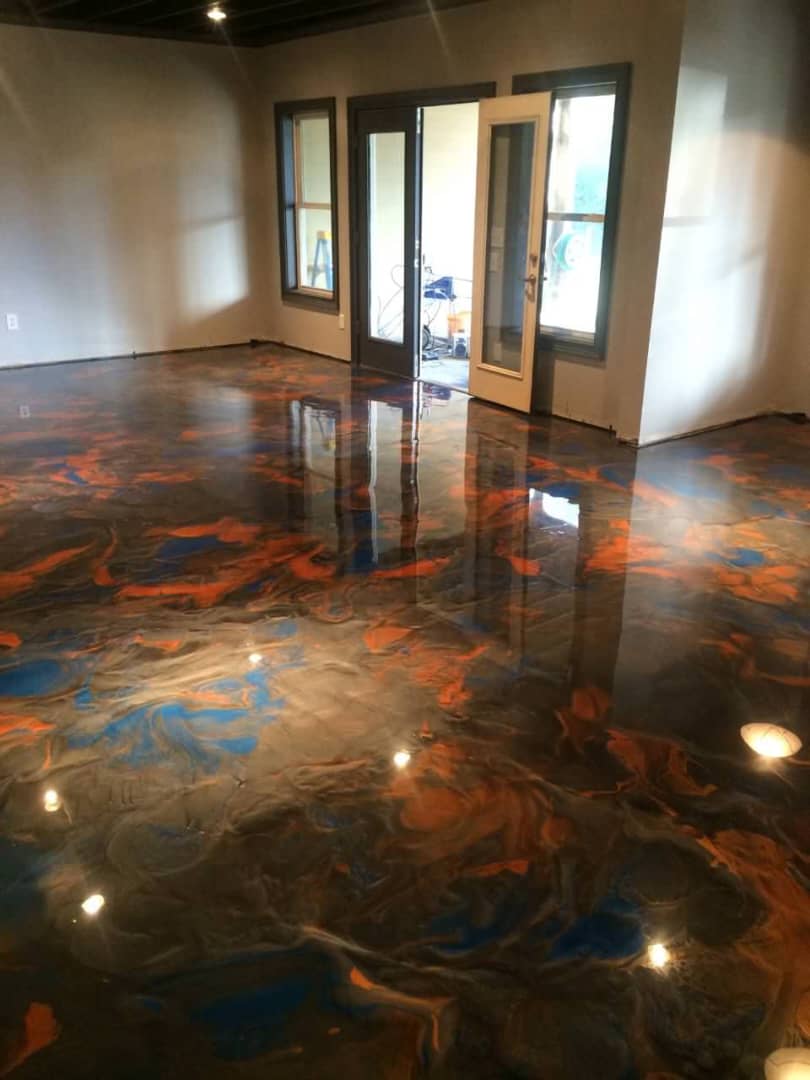
Deep tones and a reflective surface give this room a dramatic, stone-like finish.
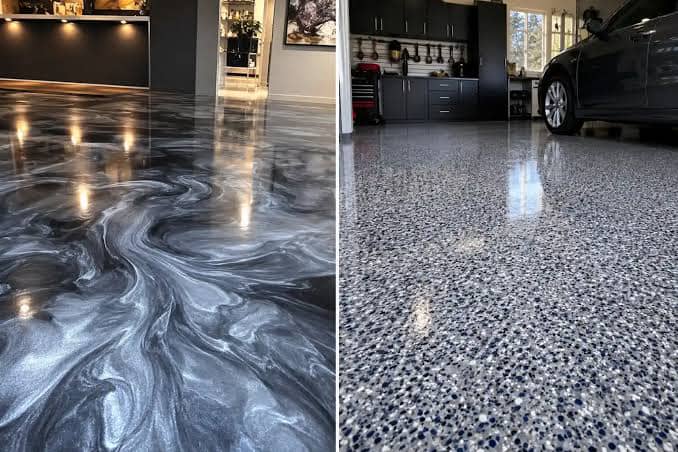
A flowing metallic look and a speckled garage finish create very different moods and maintenance needs.
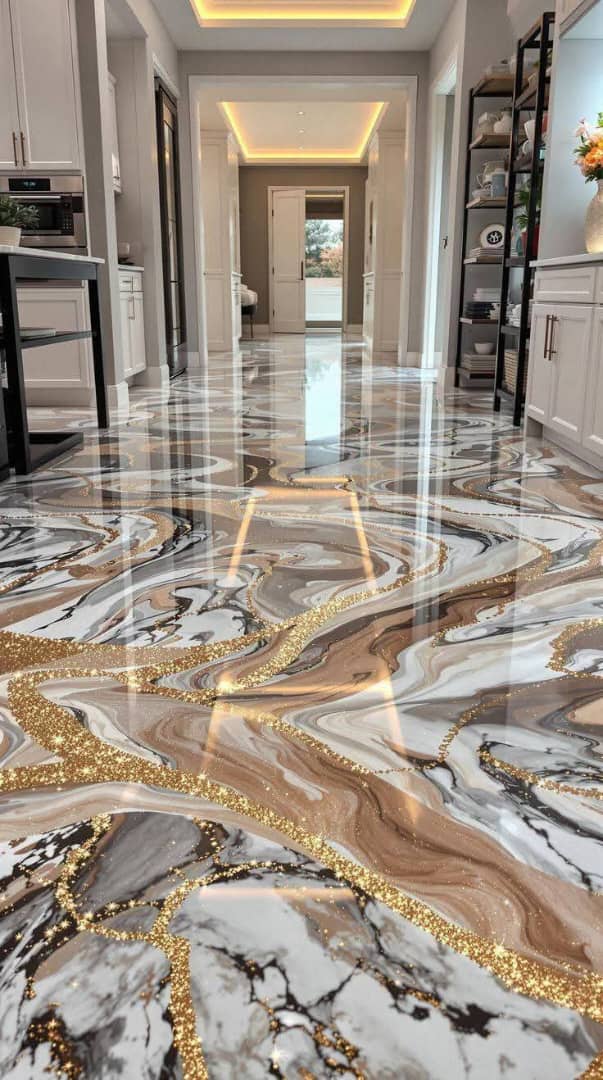
Cream, charcoal and gold lines make the floor the defining feature of a hallway.
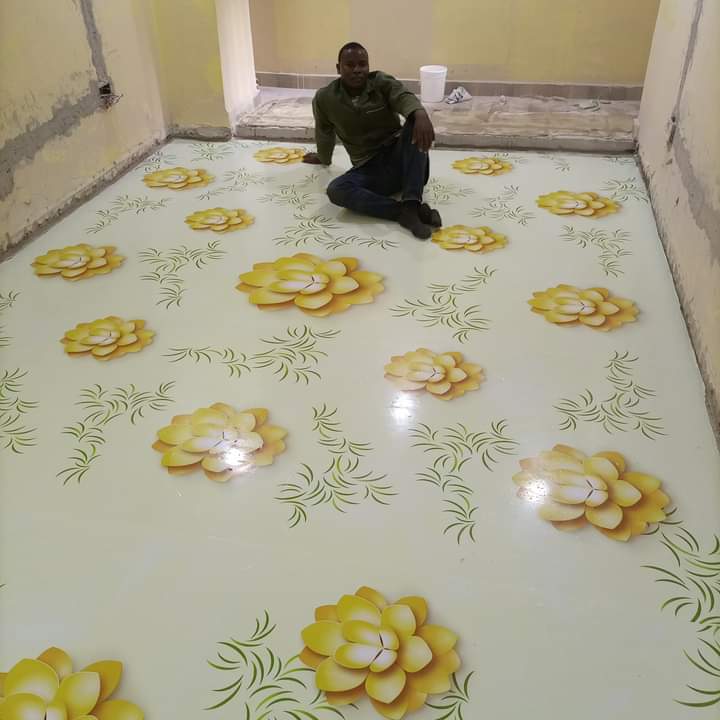
A pale background and yellow flowers show a softer route to a statement floor.
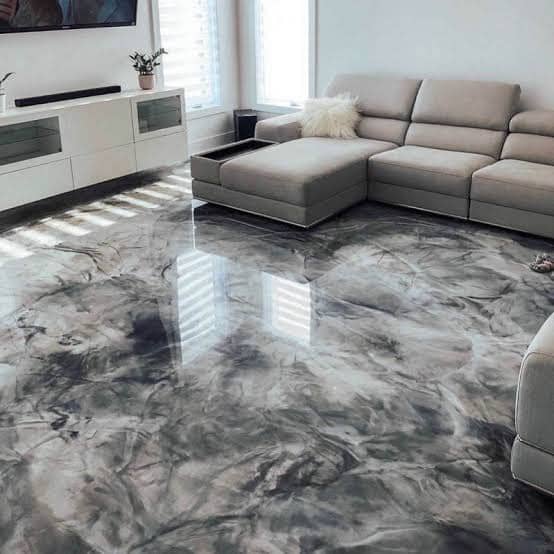
Silver and charcoal movement adds interest while leaving the furniture to lead the room.
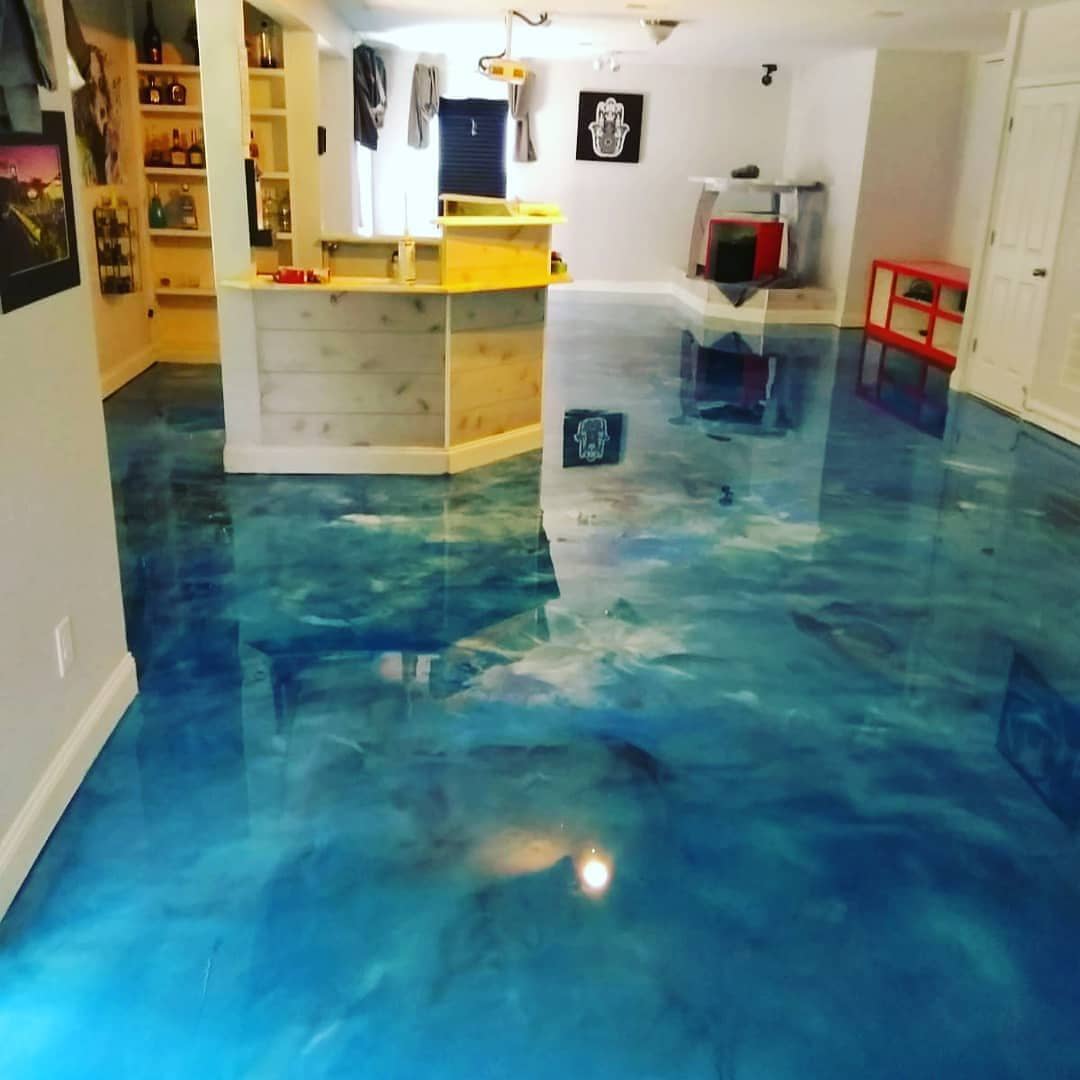
A broad blue finish gives a large room a cool, continuous feel.
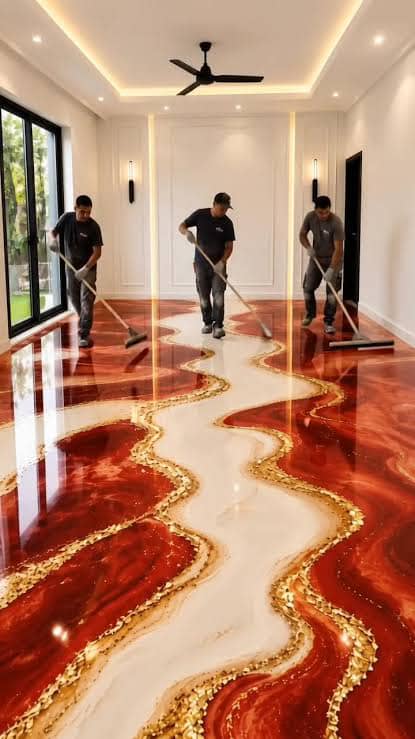
A bold pattern with gold detail shows how much visual direction a floor can carry.
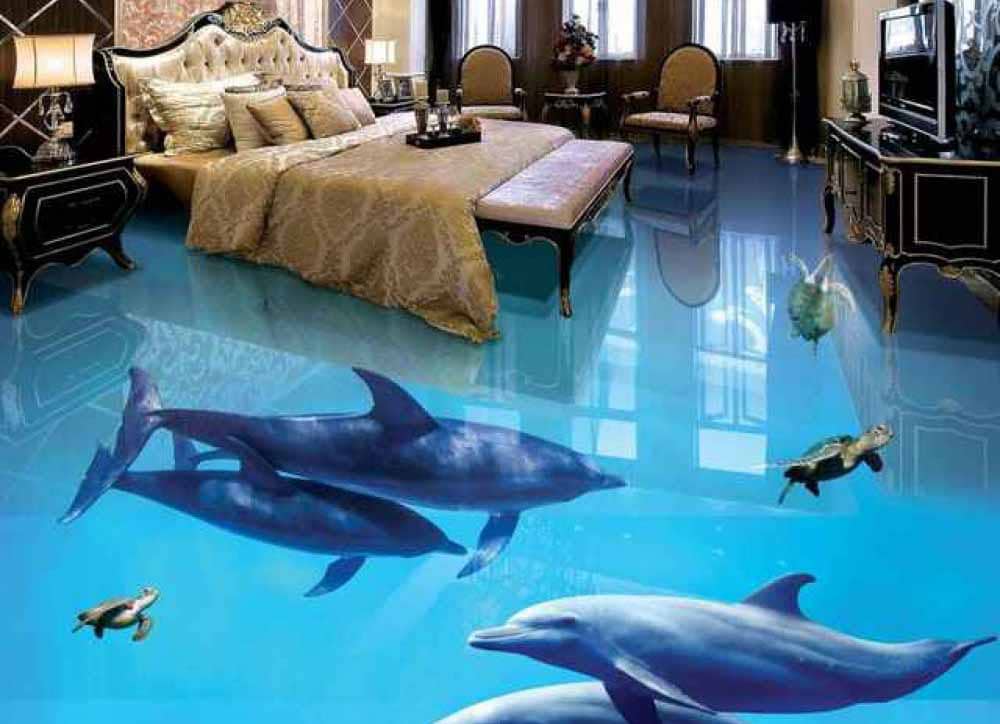
An underwater graphic creates a theatrical room. It is a decorative floor idea, not a marine repair system.
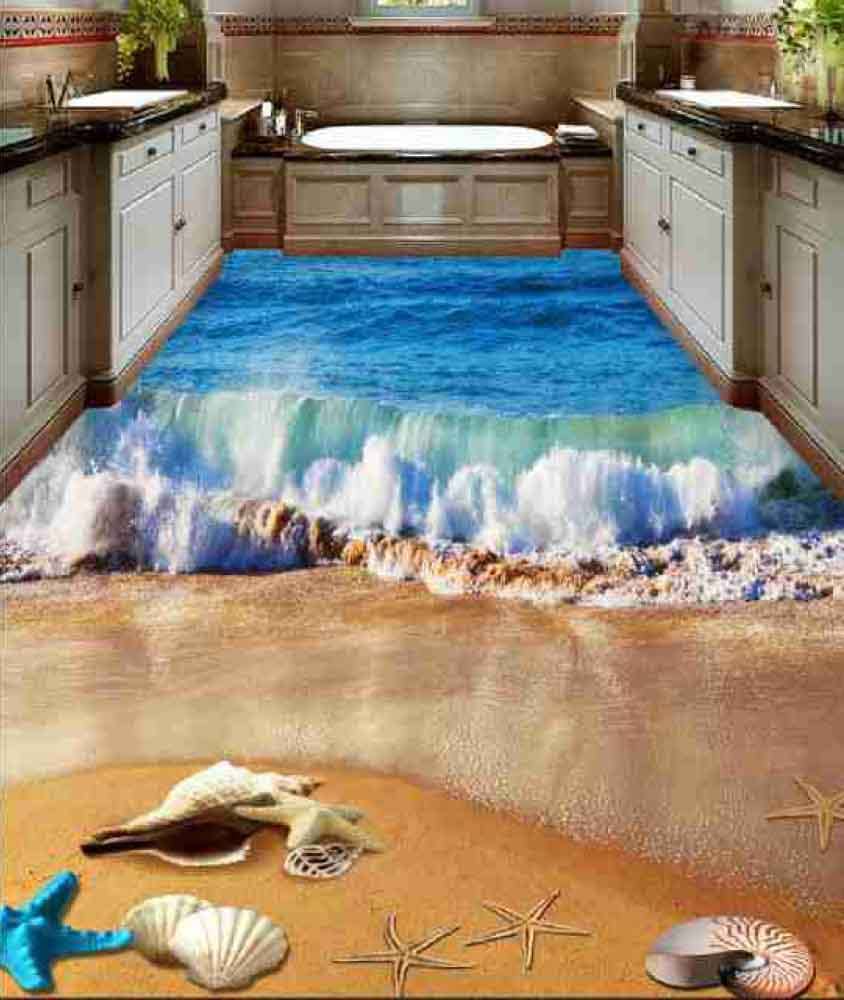
A beach scene brings colour into a bathroom; wet-area waterproofing and slip resistance need their own specification.
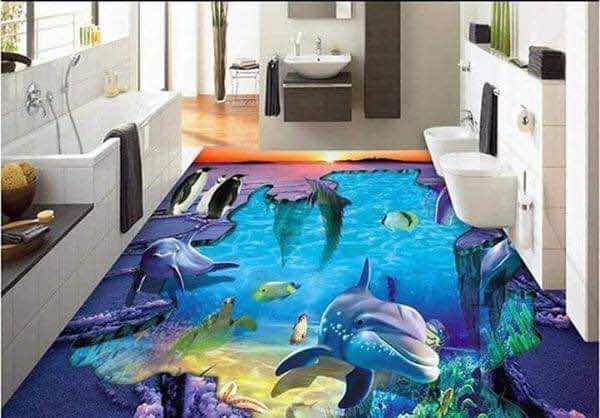
A bright ocean image turns the floor into the focal point, subject to a suitable wet-room build-up.
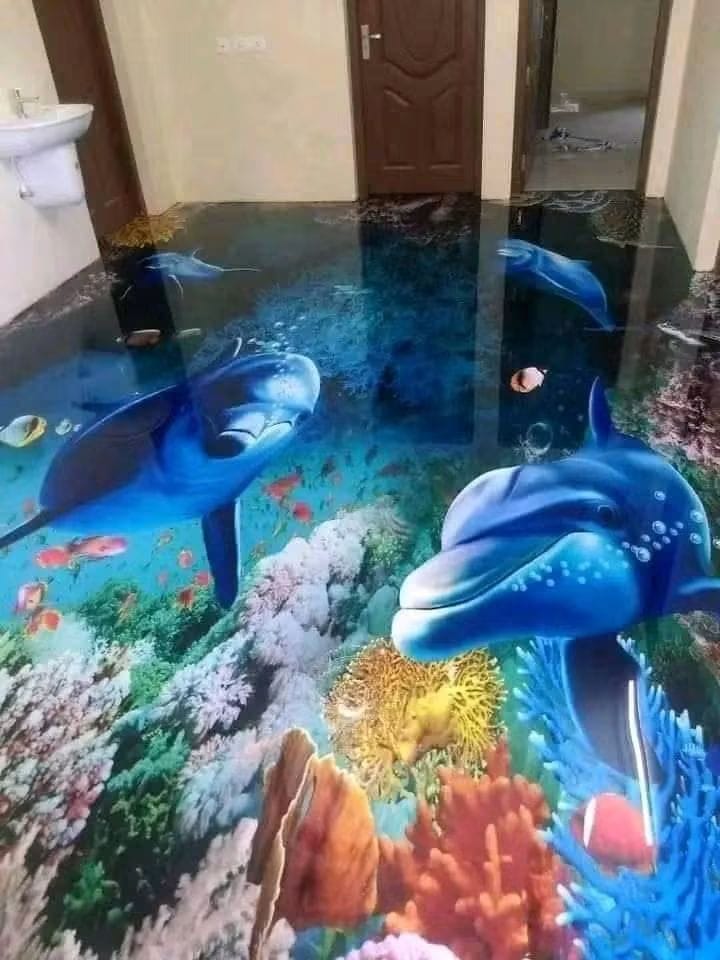
A vivid coral and dolphin scene shows the impact of a full-floor printed design.
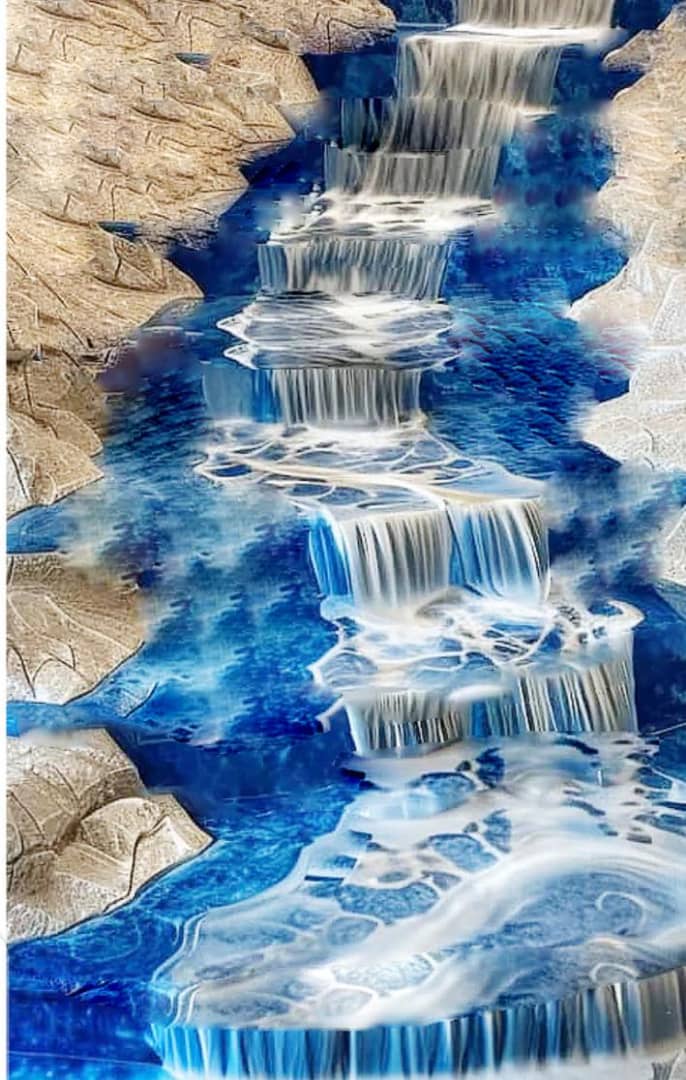
Perspective makes this waterfall artwork feel three-dimensional; site suitability still comes first.
A sand-broadcast epoxy floor uses graded quartz or sand within a suitable epoxy system. The aggregate creates texture; a specified seal coat helps bind and protect the finish. It can be considered for garages, workshops, warehouses and walkways where grip and wear matter.
After the concrete is assessed and prepared, the installer primes as specified, applies the epoxy layer, broadcasts aggregate into the wet coating, removes loose grains after curing, and seals the surface. The exact layers, coverage and cure times come from the selected product and site conditions.
The photographs below show speckled floor appearances. Decorative flakes and sand or quartz aggregate can look similar in a photo, but they are different materials. We confirm the build-up and required slip performance before quoting; no image alone guarantees grip when wet.
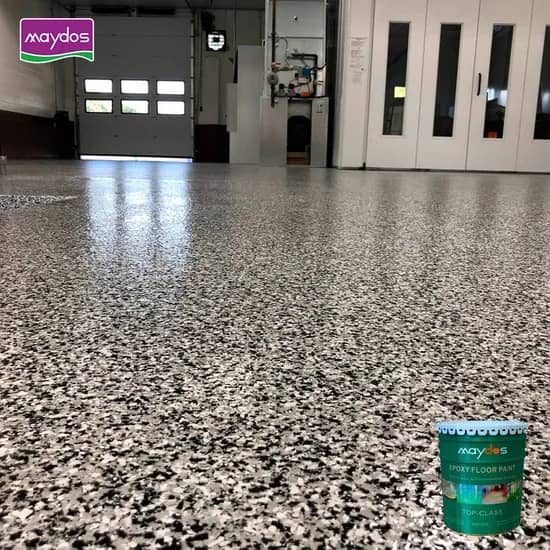
A high-contrast speckled finish can help a busy floor look considered and practical.
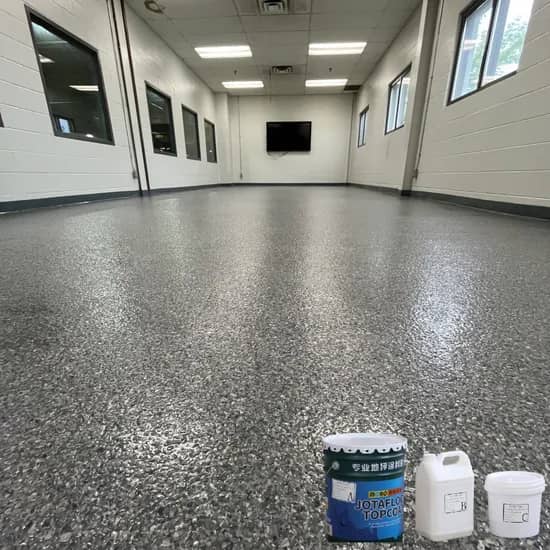
A quieter grey pattern is suited to spaces where the floor should feel even and understated.
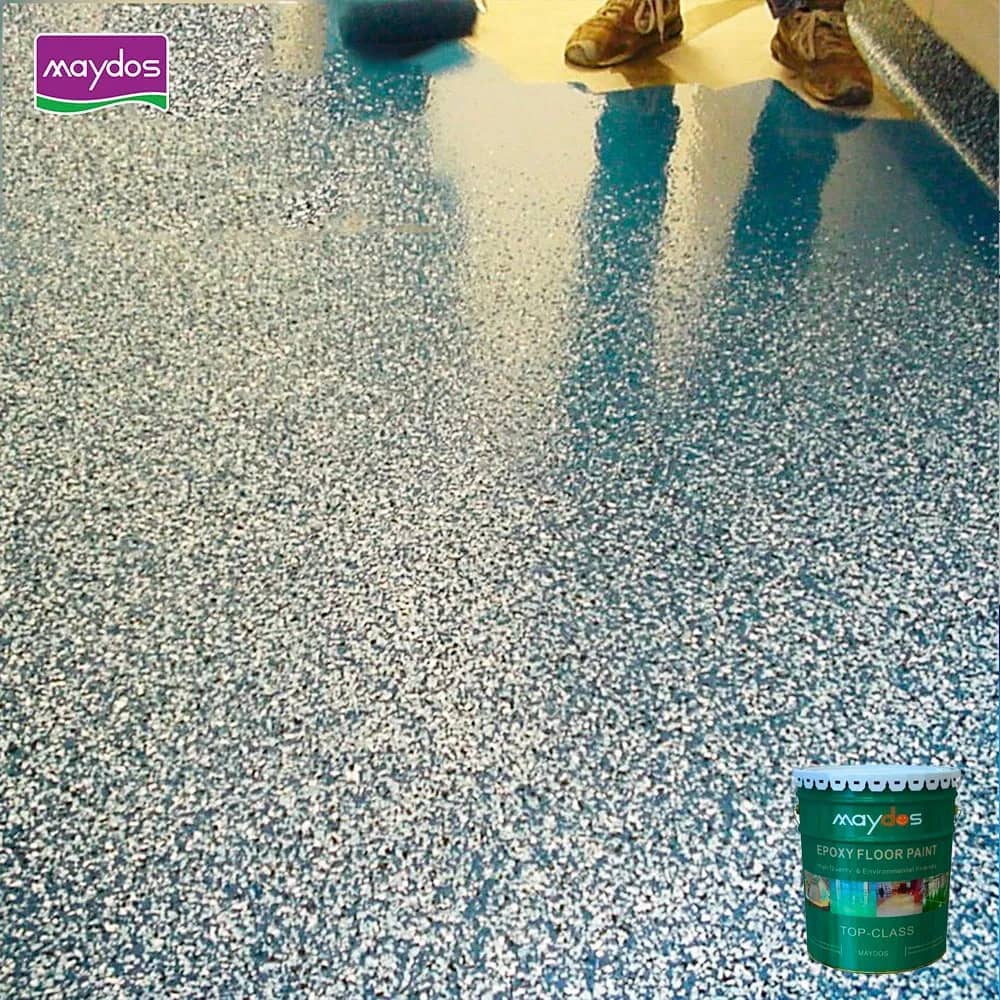
Seen close up, the small-scale pattern gives the surface depth without a large graphic.
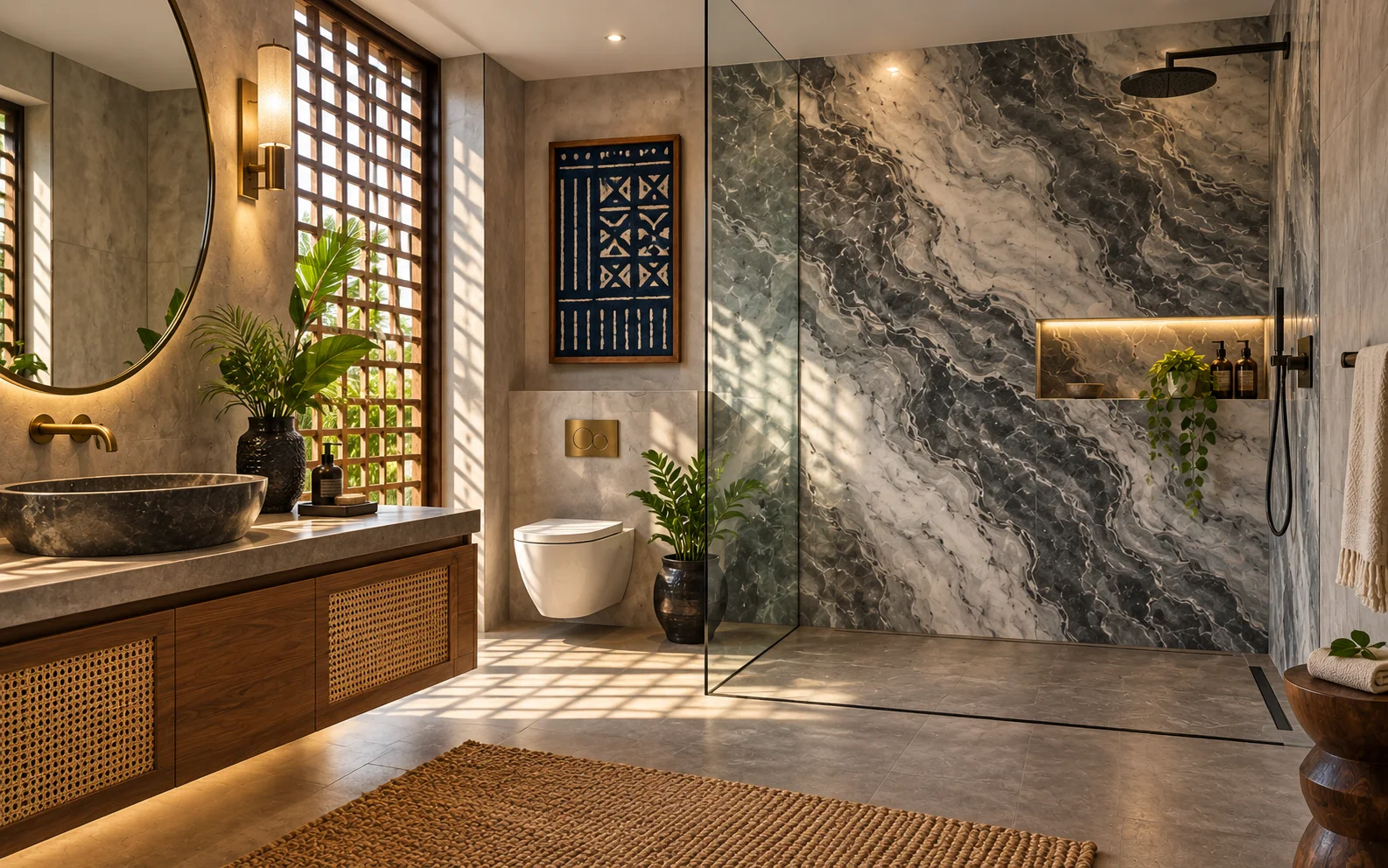 Illustrative finish concept
A guest bathroom or feature wall can carry the room's character. We assess the substrate, moisture exposure and daily use before confirming suitable materials and finish.
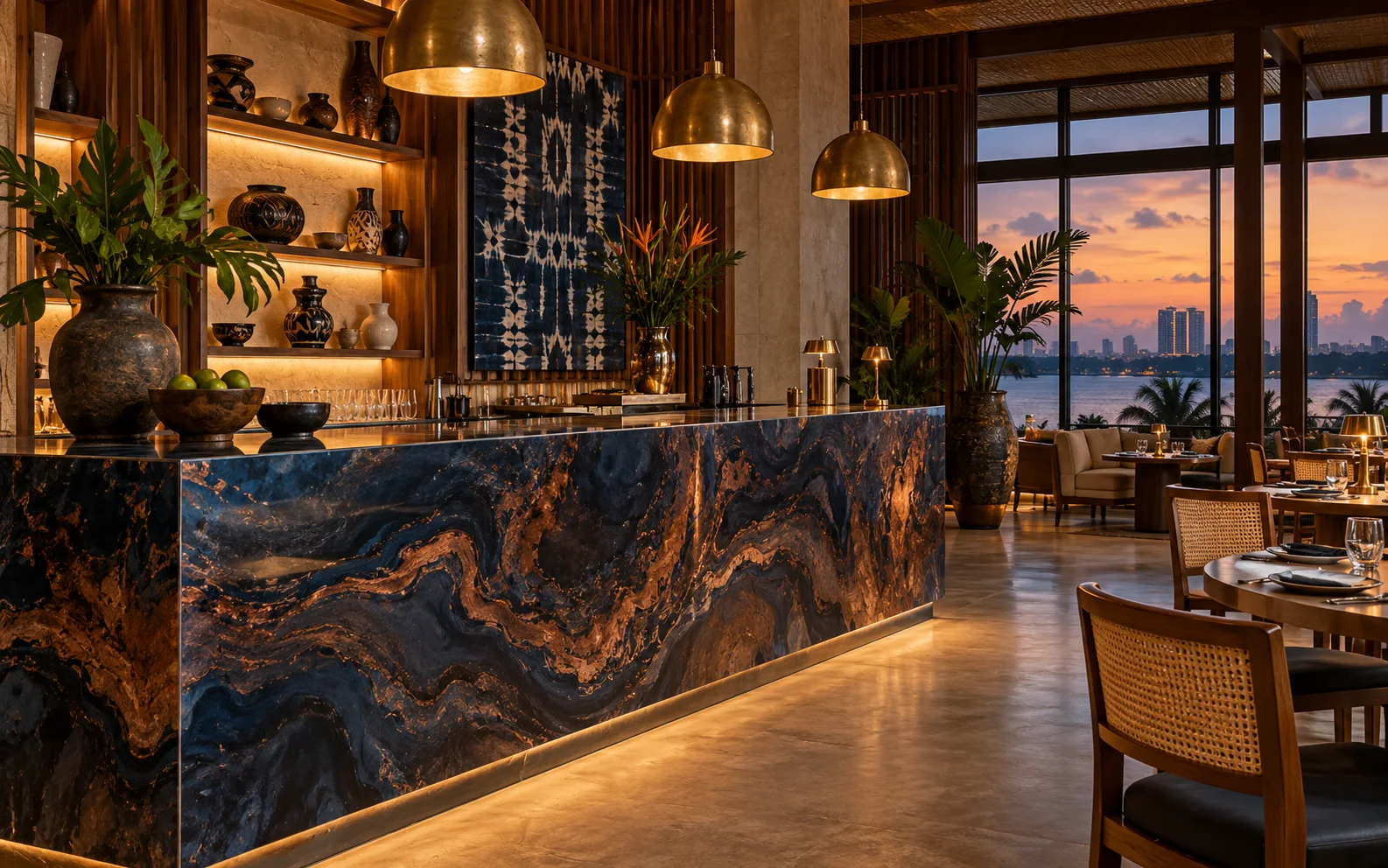 Illustrative hospitality concept
For hotels, restaurants and lounges, a considered surface can help a space feel memorable. Think an indigo and copper reception counter, a warm lobby floor or a guest bathroom feature wall. These are visual directions to discuss, not installed project photographs.
Discuss a hospitality project ↗Every space asks something different of a surface. These Nigerian-context scenes show possible directions; we confirm the right finish, slip resistance and installation scope after reviewing the actual site.
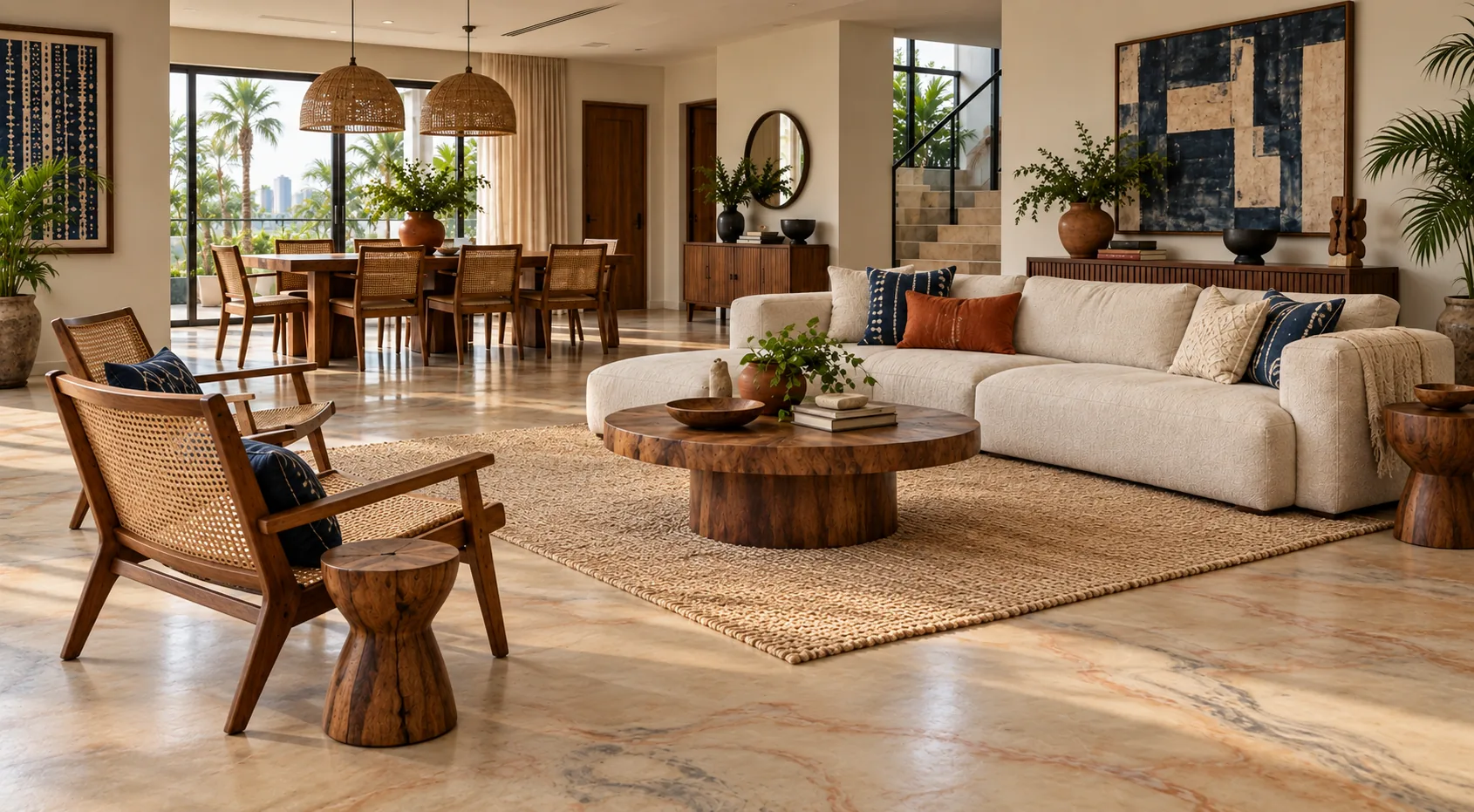 Illustrative concept
Living rooms, kitchens and personal spaces shaped around the way a family uses them.
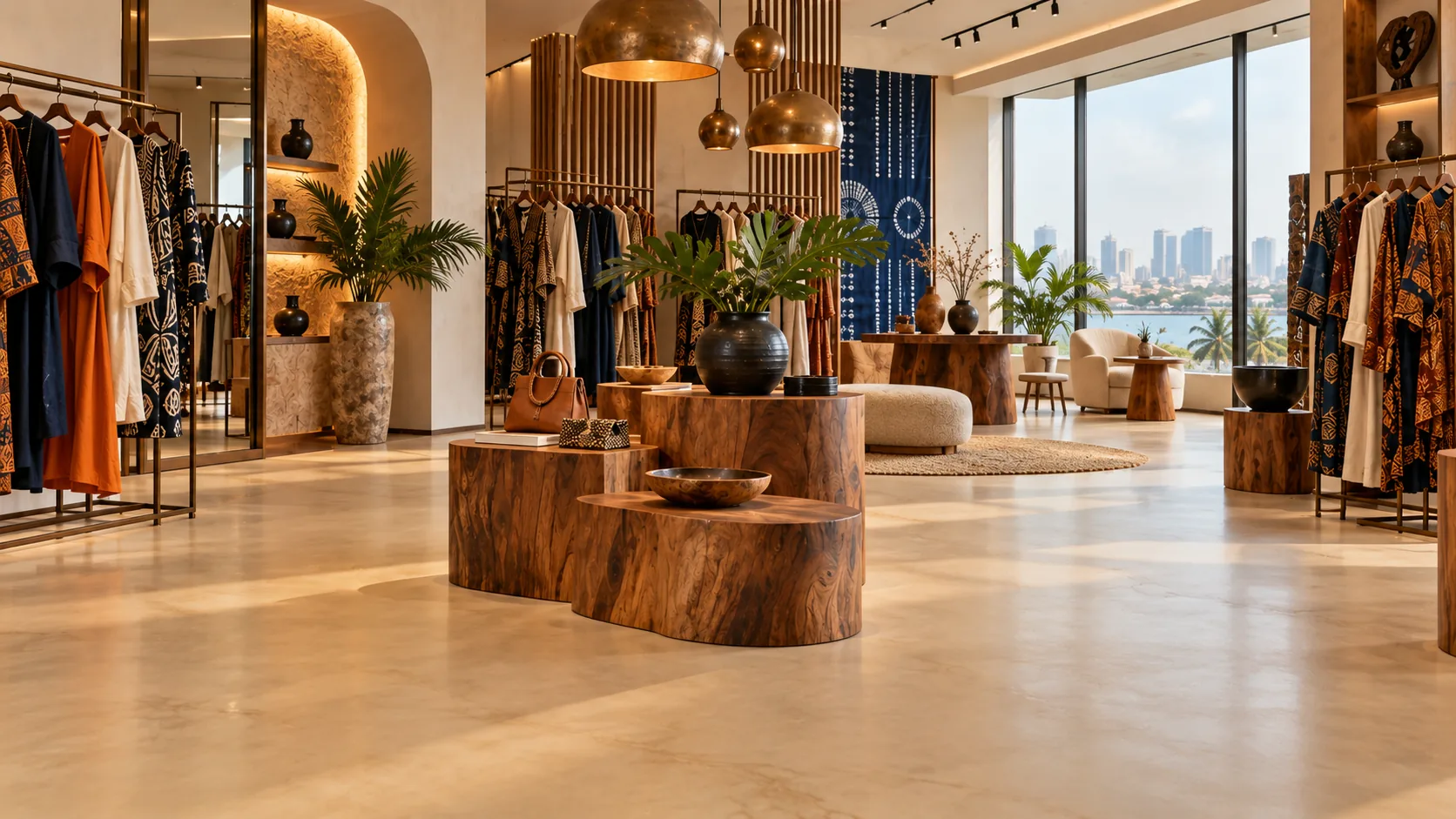 Illustrative concept
A considered floor for boutiques, showrooms and spaces where the setting is part of the experience.
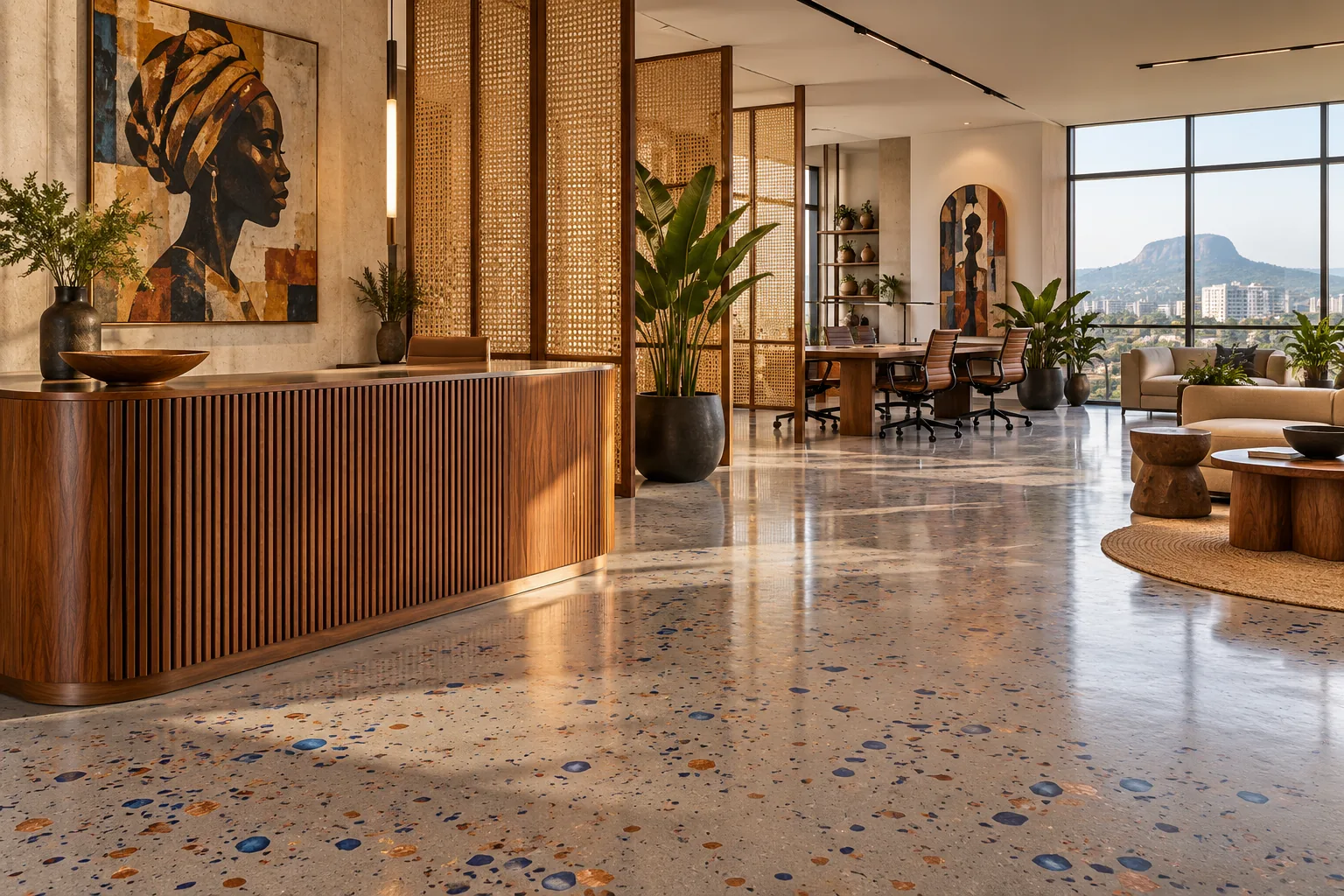 Illustrative concept
Reception areas and workspaces with finishes selected for traffic, upkeep and visual character.
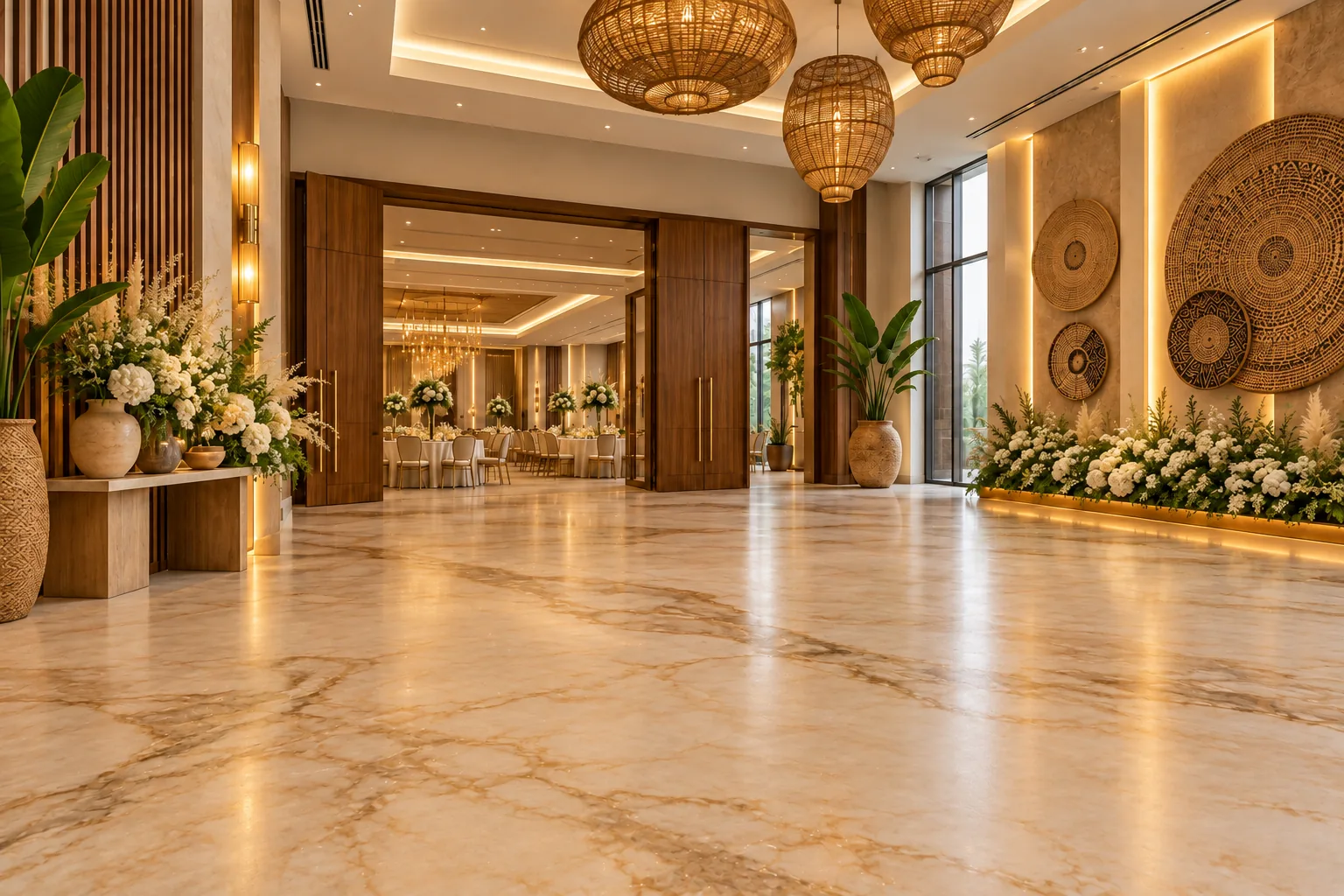 Illustrative concept
Welcoming foyers and gathering spaces designed to feel memorable from the first step.
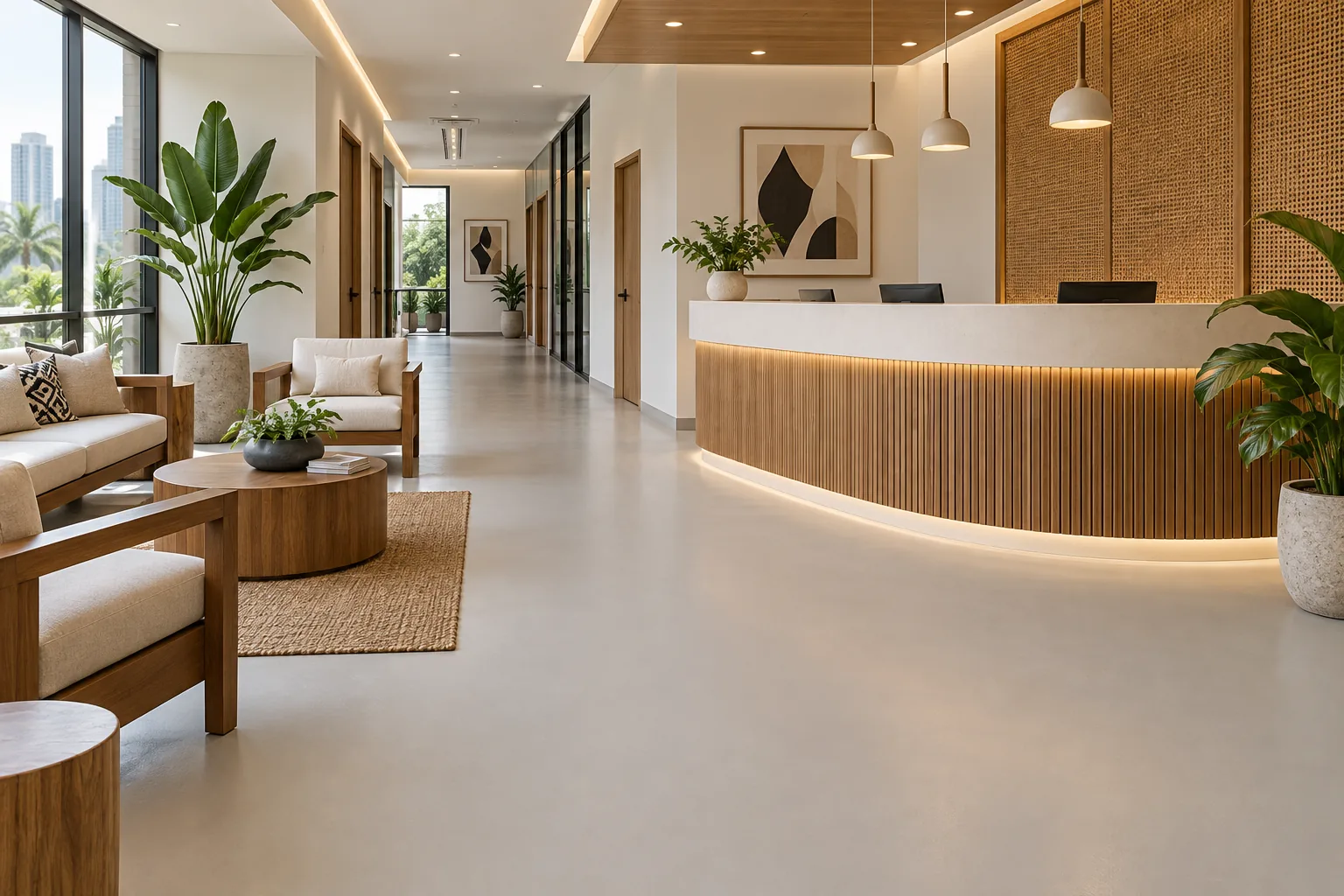 Illustrative concept
Cleanable, calm surfaces where hygiene, slip resistance and maintenance need careful planning.
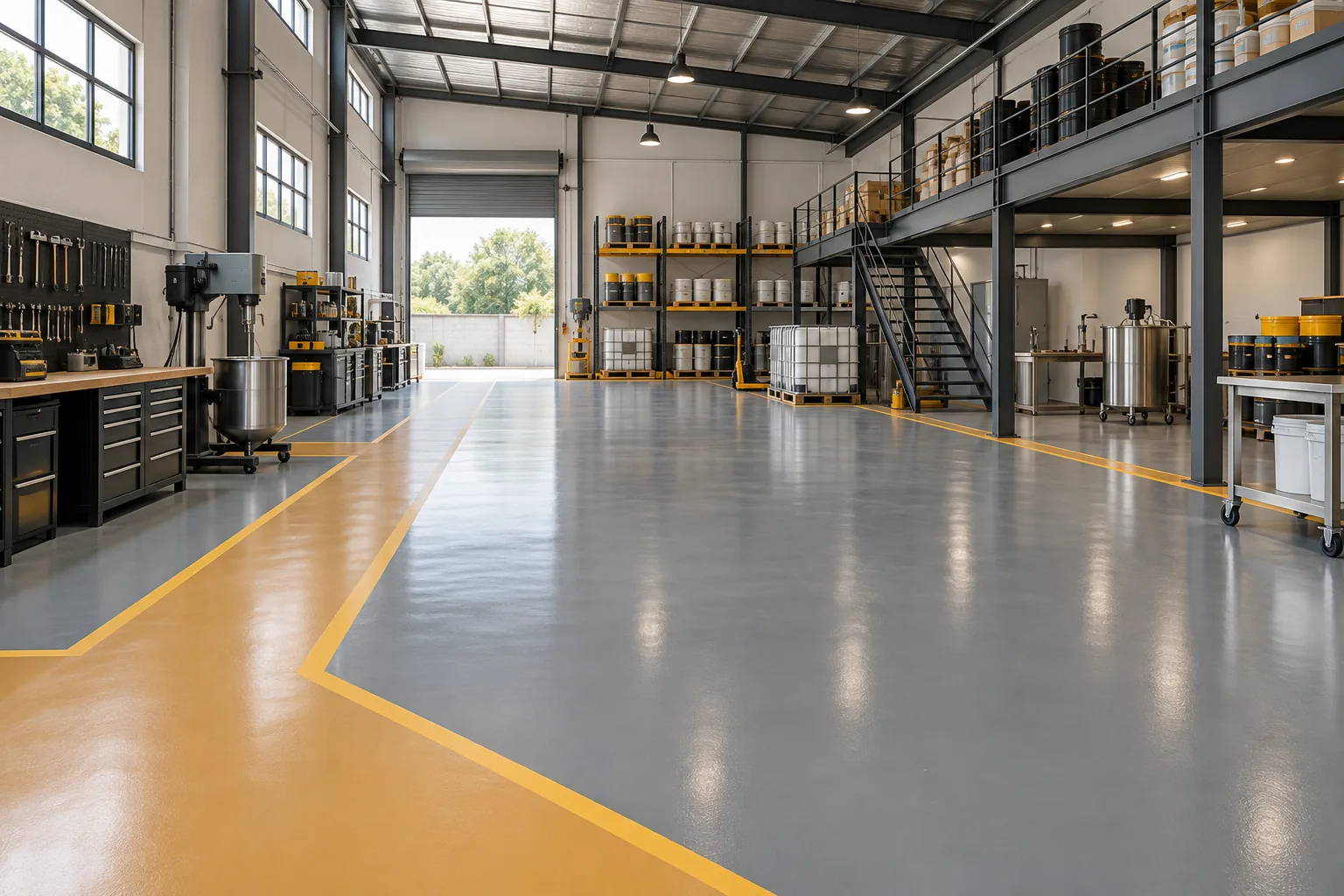 Illustrative concept
Practical surfaces for light production and service areas, specified only after a use and substrate review.
Have a salon, gallery, school, restaurant or another space in mind? Tell us how it will be used
Epoxy can bring colour and character to smaller pieces too. Explore floral accents, keepsakes and decorative forms, then tell us what you would like to make your own. We will confirm the design, materials and scope before quoting.
Enquire about a custom piece ↗These images are references for a conversation. Colours, dimensions and availability are confirmed for each enquiry.
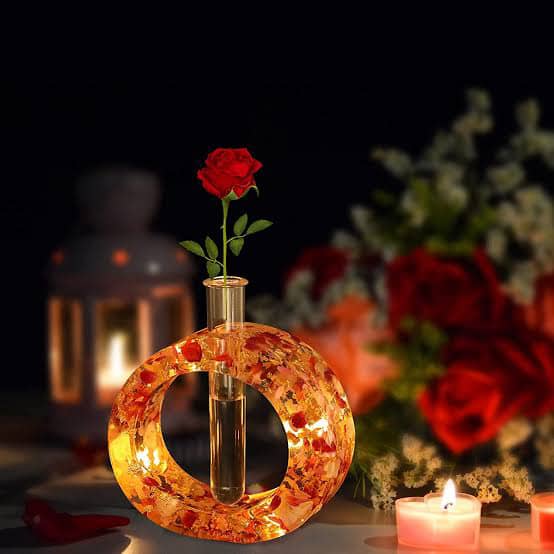
Warm amber tones give this circular form a gentle glow. A single rose becomes a striking detail for a dining table, reception desk or gift.
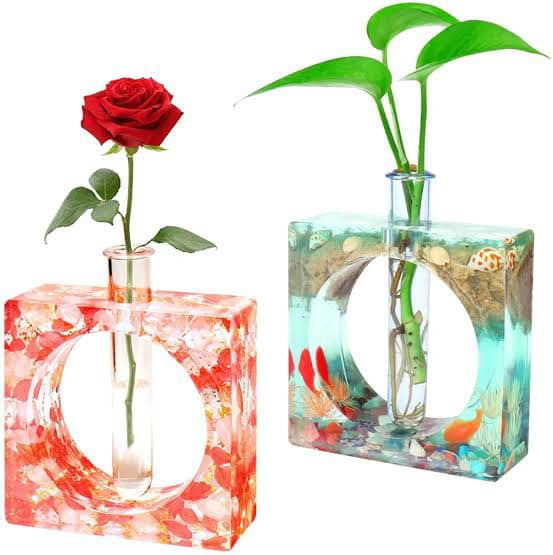
Clear openings and layered colour let flowers remain the focus. This playful direction can be explored with a palette that suits a room or occasion.
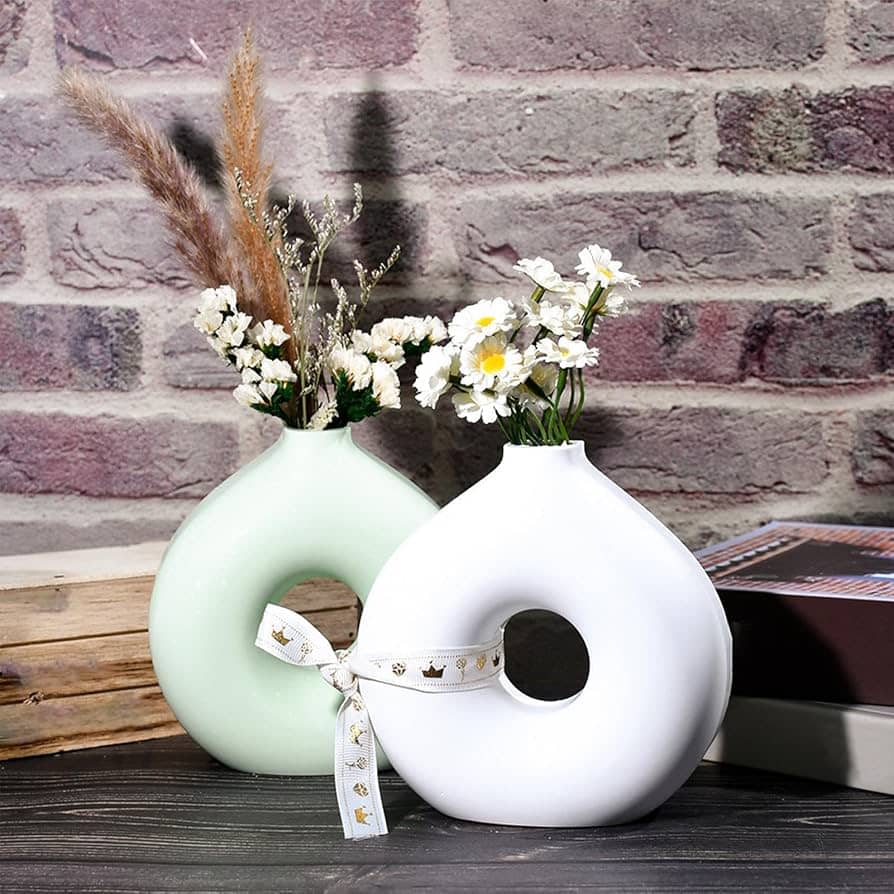
Two rounded silhouettes bring balance to a shelf or side table. Their soft tones keep the arrangement calm while the flowers add colour and movement.
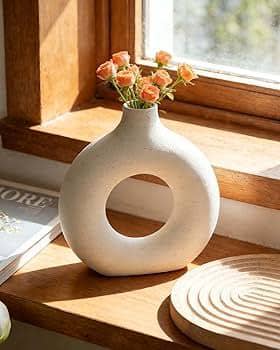
A simple circular opening gives this neutral vase its character. Consider it for a windowsill, sideboard or quiet corner that needs one thoughtful object.
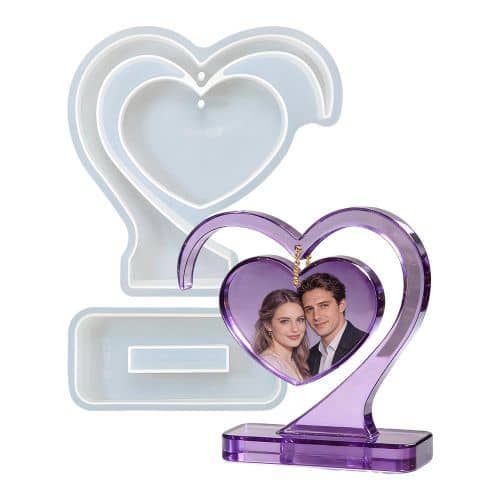
A photograph sits at the heart of this translucent display. Colour and shape make it a personal direction for an anniversary, birthday or wedding gift.
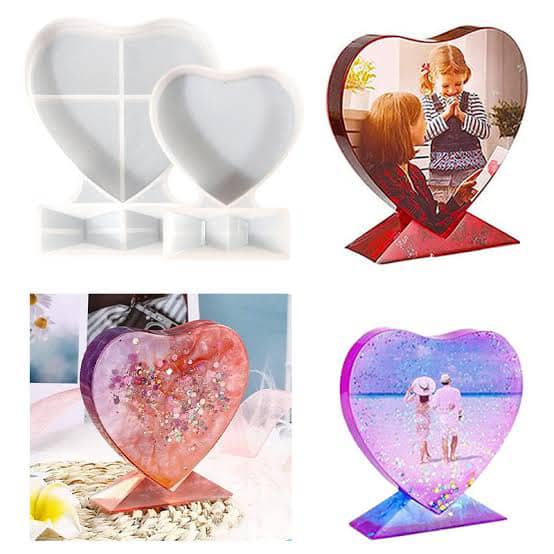
From clear framing to colour and embedded detail, a heart-shaped piece can hold a memory in different ways. Share the photograph or moment you want it to celebrate.

Overlapping heart shapes create a playful frame for a favourite photo. It is a compact gift idea that can be tailored through colour and personal detail.

Detailed moulds suggest possibilities for themed ornaments and collectibles. Bring a shape or story to us and we can discuss a finish that is practical to produce.
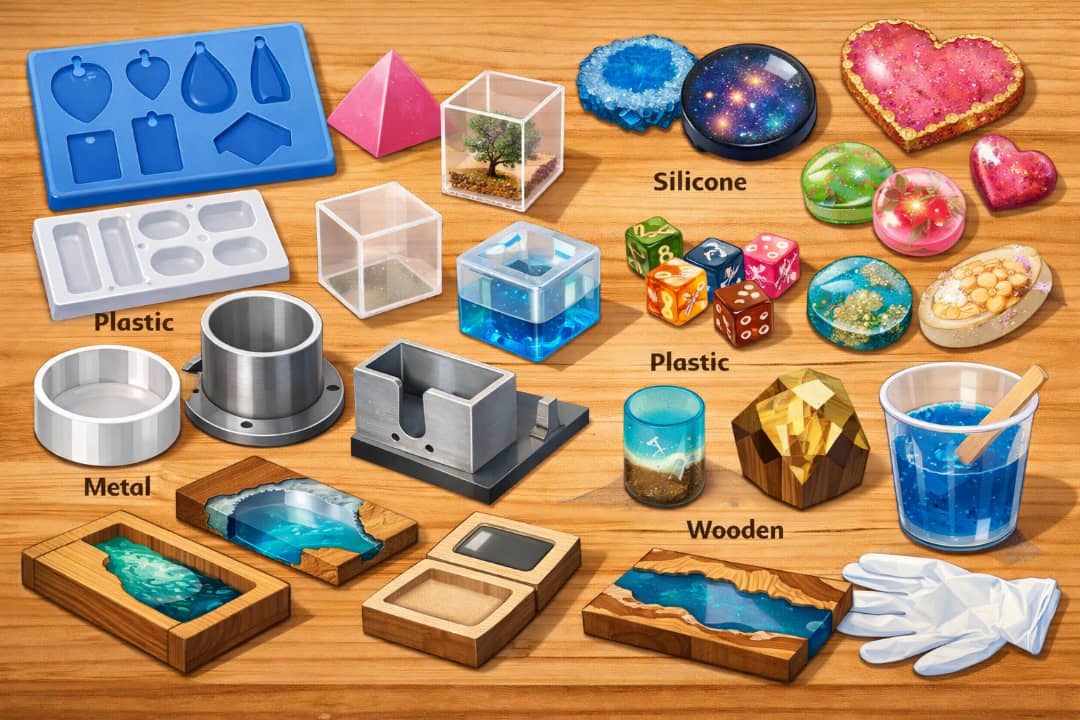
This illustration shows how moulds, colour and embedded details can change a resin object. It is a starting point for discussing a custom idea, not a finished product photograph.
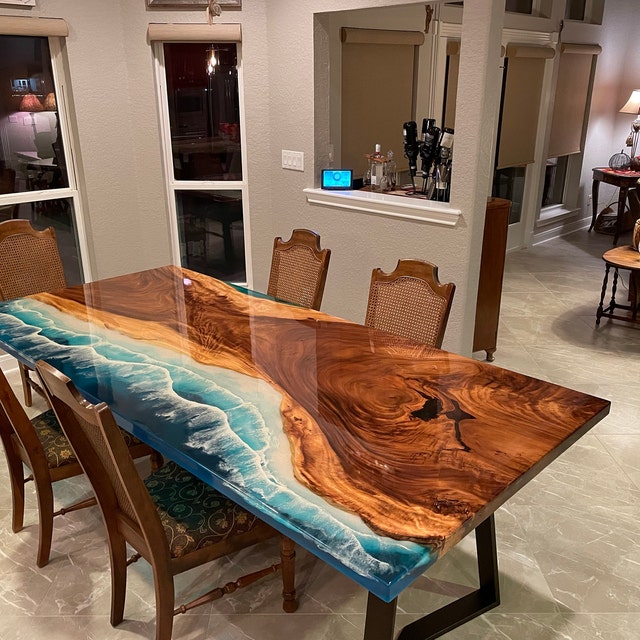
A blue resin channel follows the grain of the timber, turning a dining table into the centre of the room. Timber selection, size and finish would be planned around the brief.
Marine epoxy is a resin-and-hardener system selected for bonding, sealing, coating or laminating materials exposed to water. It is commonly used in boat and canoe repairs, fibreglass work, timber sealing and other marine maintenance.
The right system depends on the material, whether it will face splashes or continuous immersion, and the protective finish needed above the epoxy. This is separate from the ocean-themed floor graphics shown earlier.
Discuss a marine projectThe steps below give you a useful picture of an installation. The materials, number of coats, cure time and access plan depend on the site and the selected system.
We discuss the look, location, approximate area and daily use, then assess the existing surface, moisture, repairs and any slip or cleaning requirements.
The area is cleared and protected. The base is cleaned, mechanically prepared where needed, and repaired so the coating has a sound foundation.
A suitable primer and epoxy layers are applied. Colour, marbling or decorative detail is created in the system, with a protective topcoat where specified.
The surface is left undisturbed for the product-specific cure period. We confirm when it can take foot traffic or furniture and share care guidance.
Installation needs access to the space and a period when the surface cannot be used. We confirm the sequence and realistic downtime in your quotation after assessing the site.
Share your location, surface, approximate area and a few photos if you have them. We will review the brief before discussing a suitable approach, timing and quotation.